
A Sponsored Project by George P. Johnson
This project reimagines the S/S 26' "Temple" collection by Rick Owens into a living, multi-sensory world. Through a two-phase design, the popup guides visitors from reflection to release—first inviting the public to experience the garments as art, then inviting guests into an intimate underground celebration.
This project reimagines the S/S 26' "Temple" collection by Rick Owens into a living, multi-sensory world. Through a two-phase design, the popup guides visitors from reflection to release—first inviting the public to experience the garments as art, then inviting guests into an intimate underground celebration.
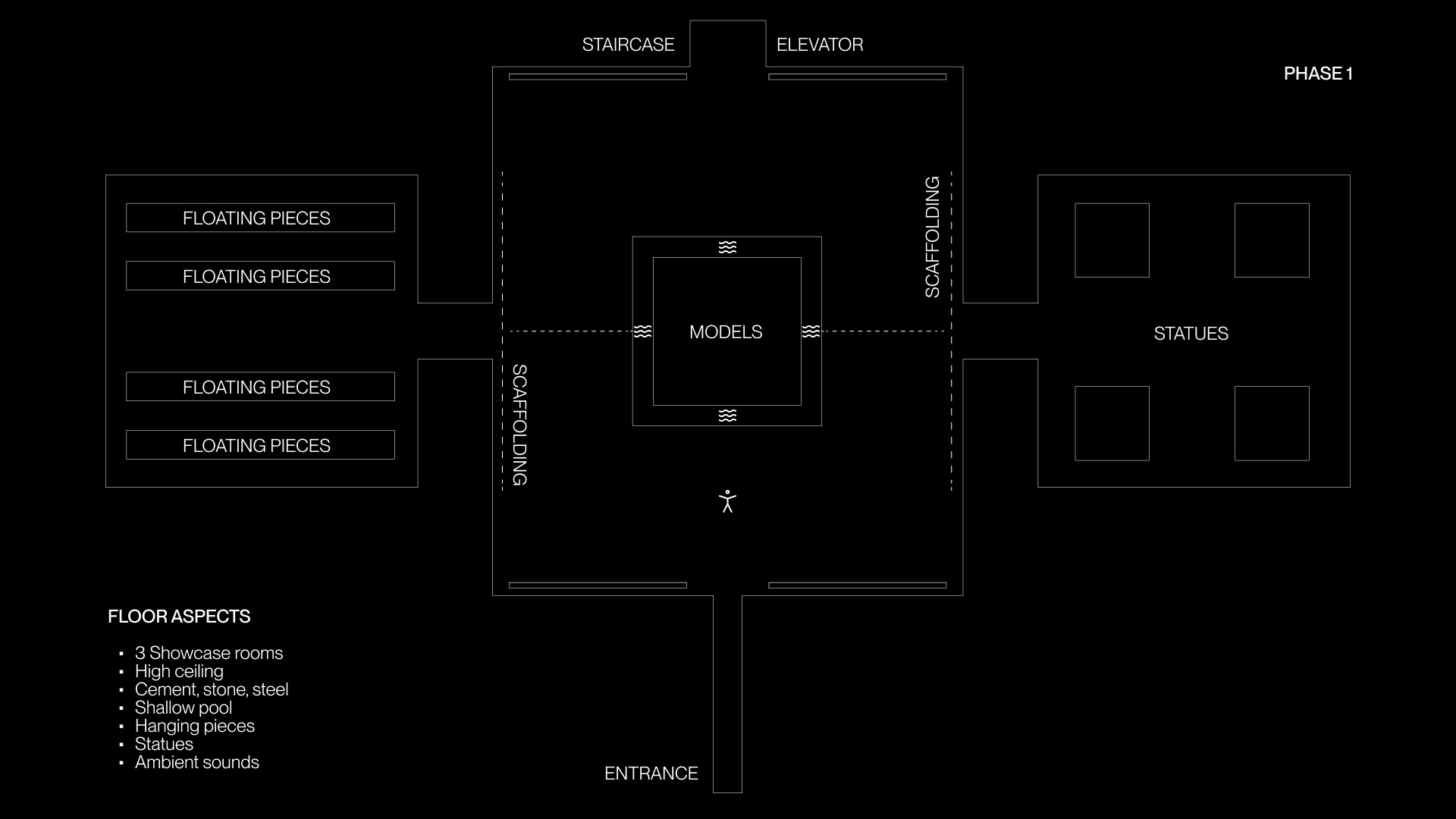
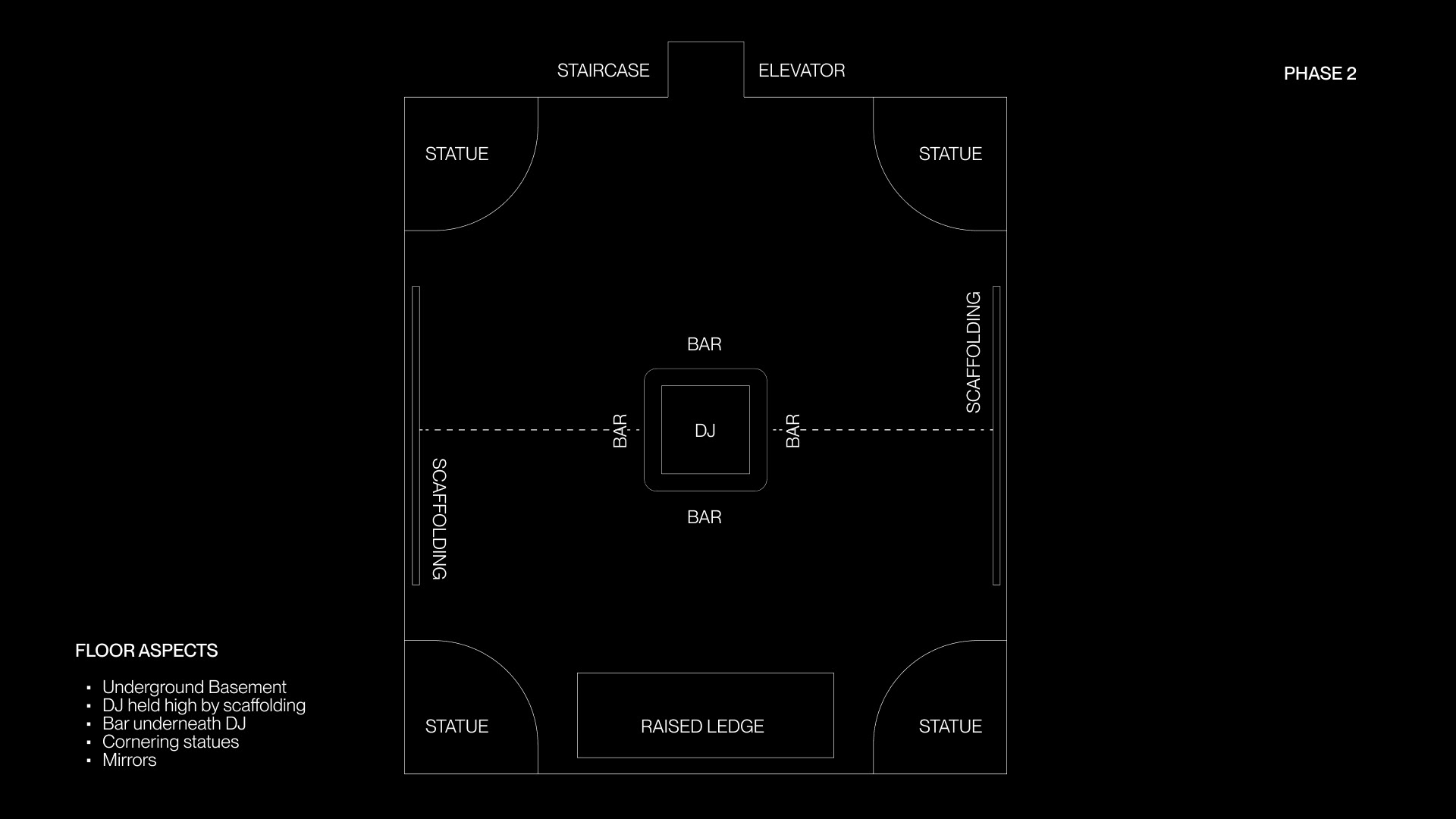
Design Process - Floor Plan Development
I began design process by creating a general floor plan that outlined all of the exhibition rooms and their layout. This helped define how visitors would move through the space and experience each section of the exhibition.
I began design process by creating a general floor plan that outlined all of the exhibition rooms and their layout. This helped define how visitors would move through the space and experience each section of the exhibition.
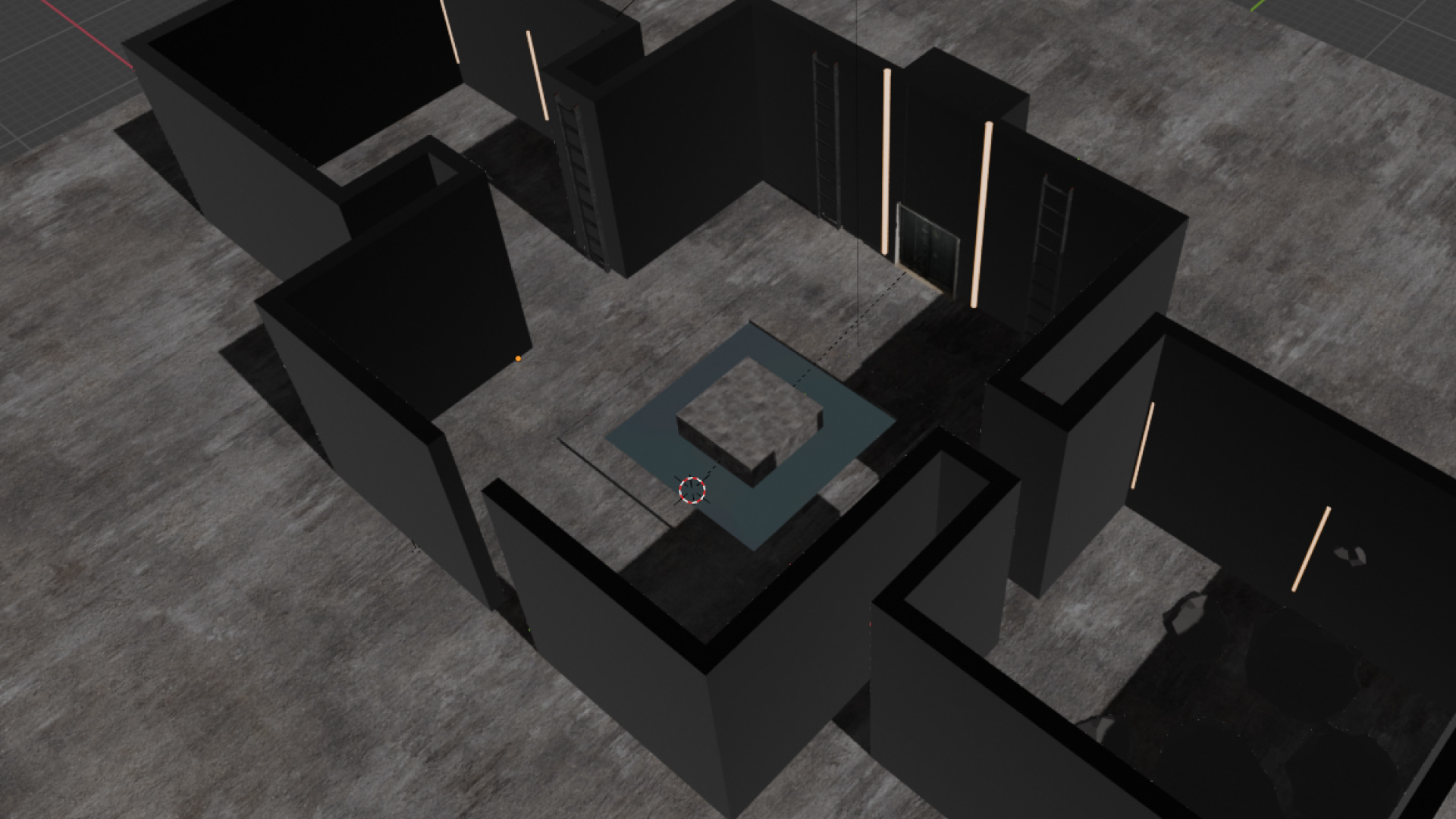
Design Process - 3D Render
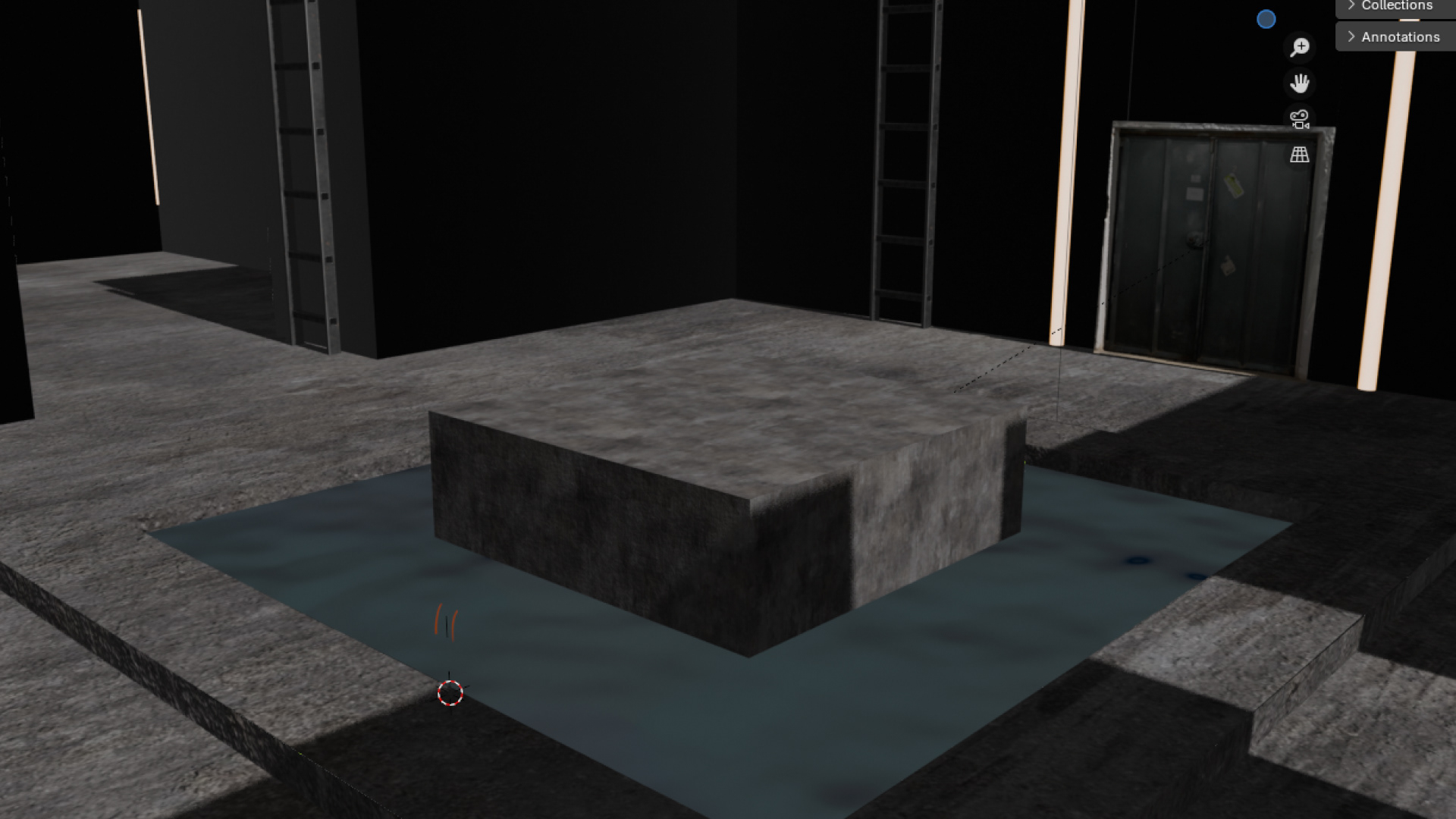
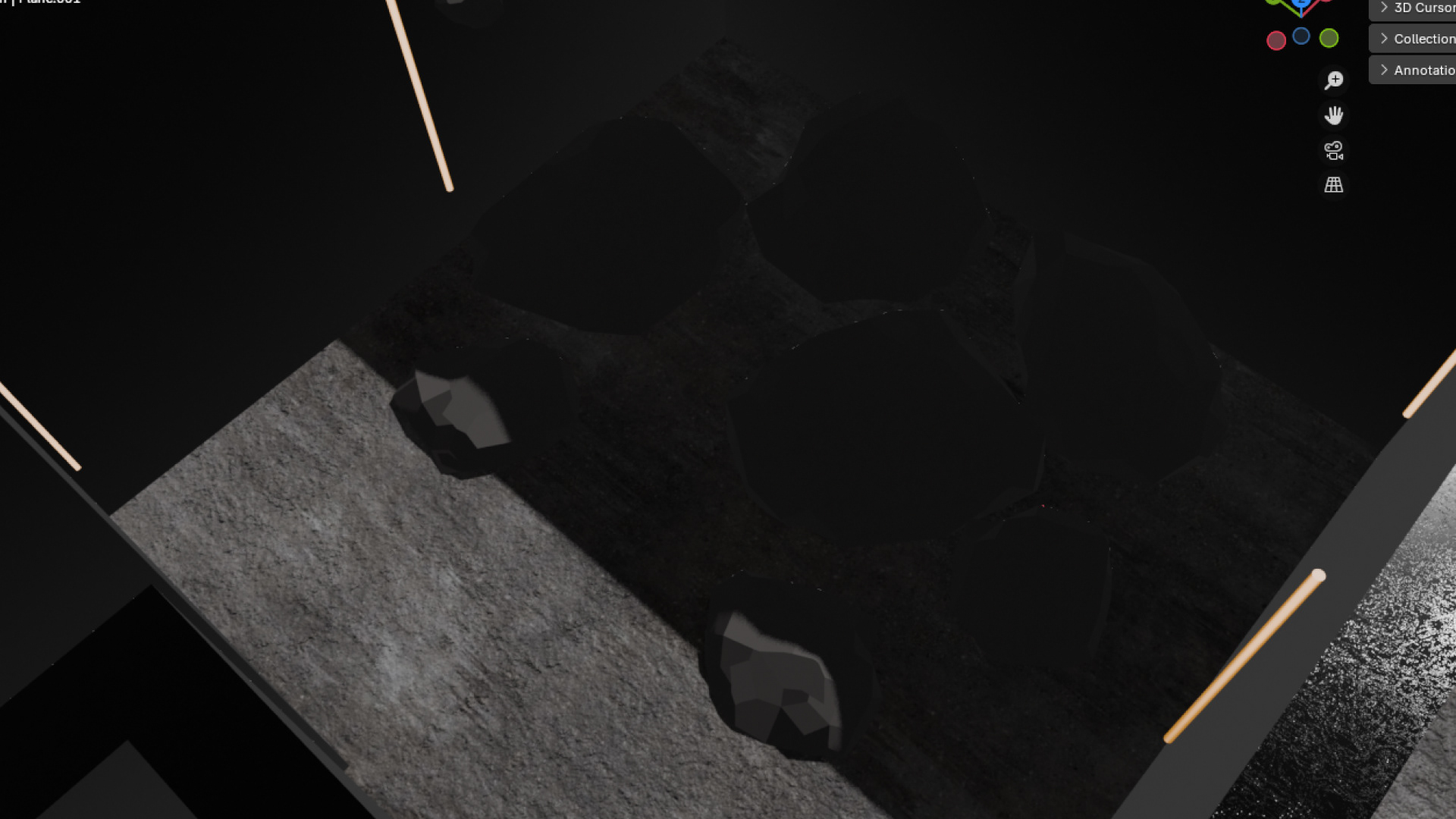
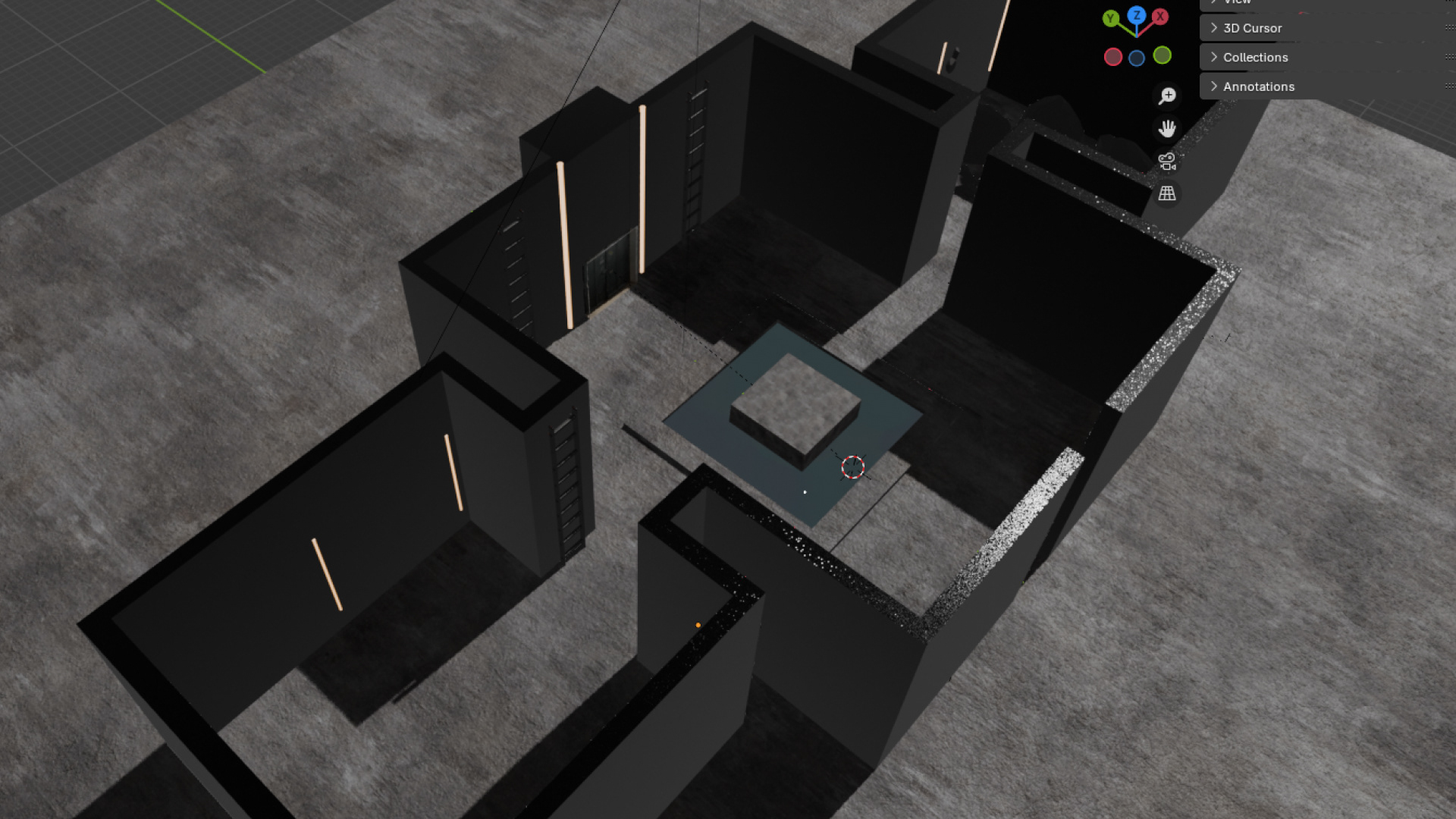
After identifying limitations within the initial floor plan wireframes, I moved the layout into Blender to further test and refine the exhibition design. Translating the plan into a three-dimensional space allowed me to identify spatial issues that were not fully visible in two dimensions.
Through these early Blender renders, I adjusted room proportions, circulation paths, and spatial relationships to create a more cohesive and immersive layout.
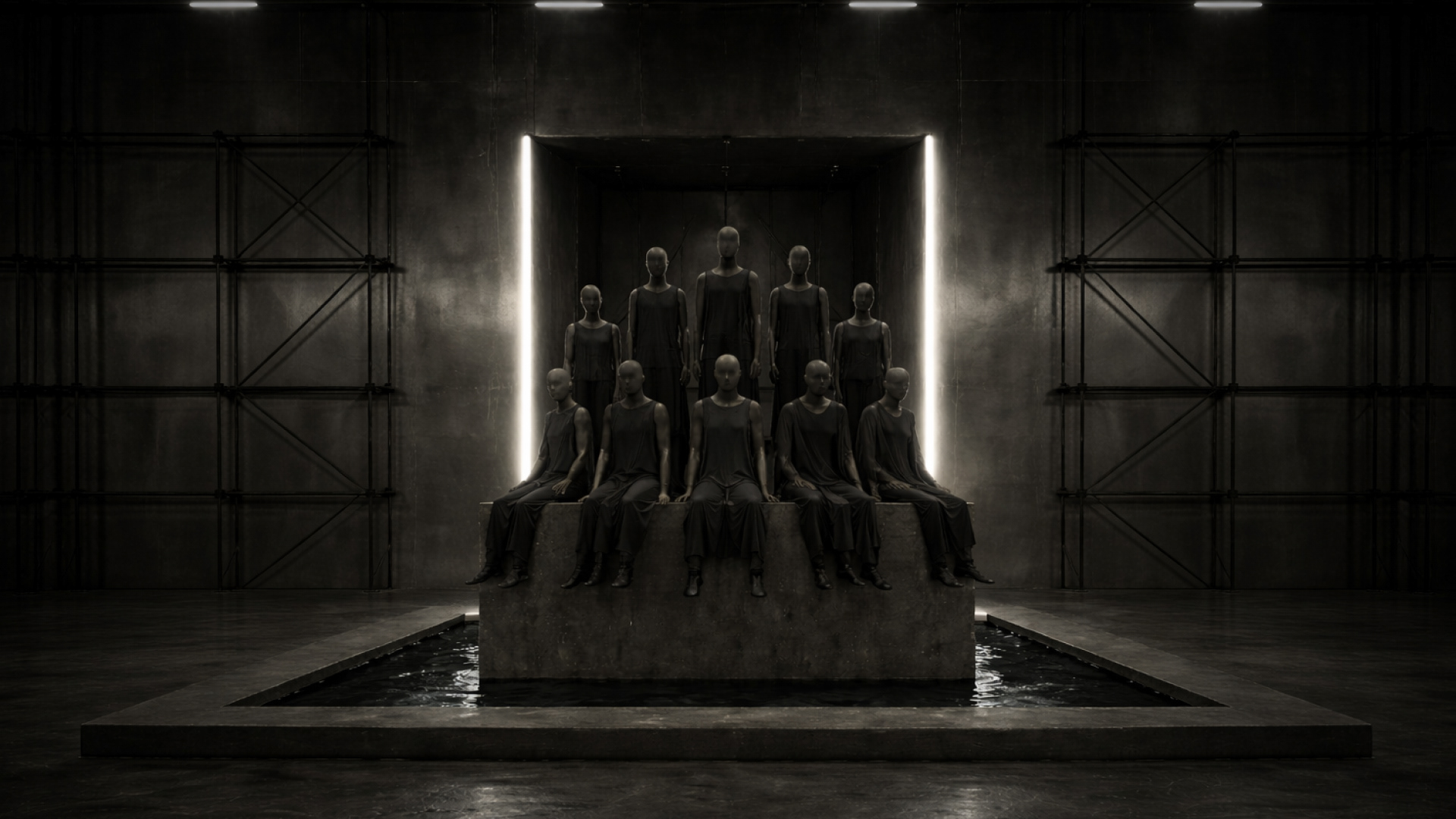
Design Process - Final Render
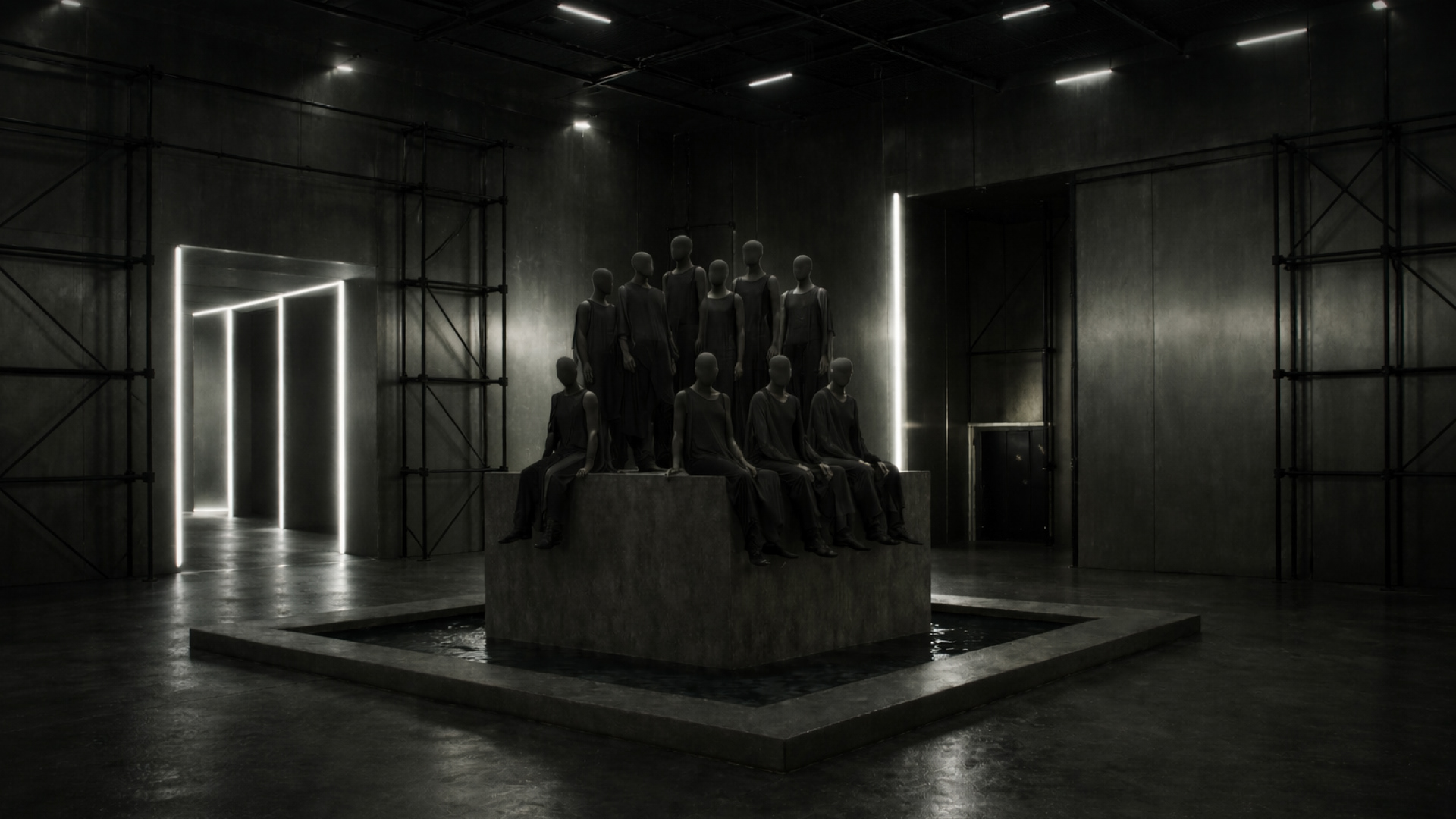
After creating basic spatial renders in Blender, I used AI tools to push the visuals further and explore a more realistic interpretation of the exhibition. By importing my initial Blender renders into AI sources, I was able to enhance materiality, lighting, and atmosphere while maintaining the core structure of my design.
These AI-generated visuals were then refined in Photoshop, where I adjusted lighting, contrast, and details to better align with the mood and identity of Temple of Chaos. This process allowed me to bridge the gap between conceptual design and a more immersive, finished representation of the space.
Phase 01 - Room 01
Just beyond the entrance lays The Basin. It features a central raised platform where models stand still and silent, transforming the space into a living installation that blurs the line between performance and sculpture.
At the center of the room is a shallow reflective pool that creates the illusion of walking on water, echoing the runway experience.
Phase 01 - Room 02
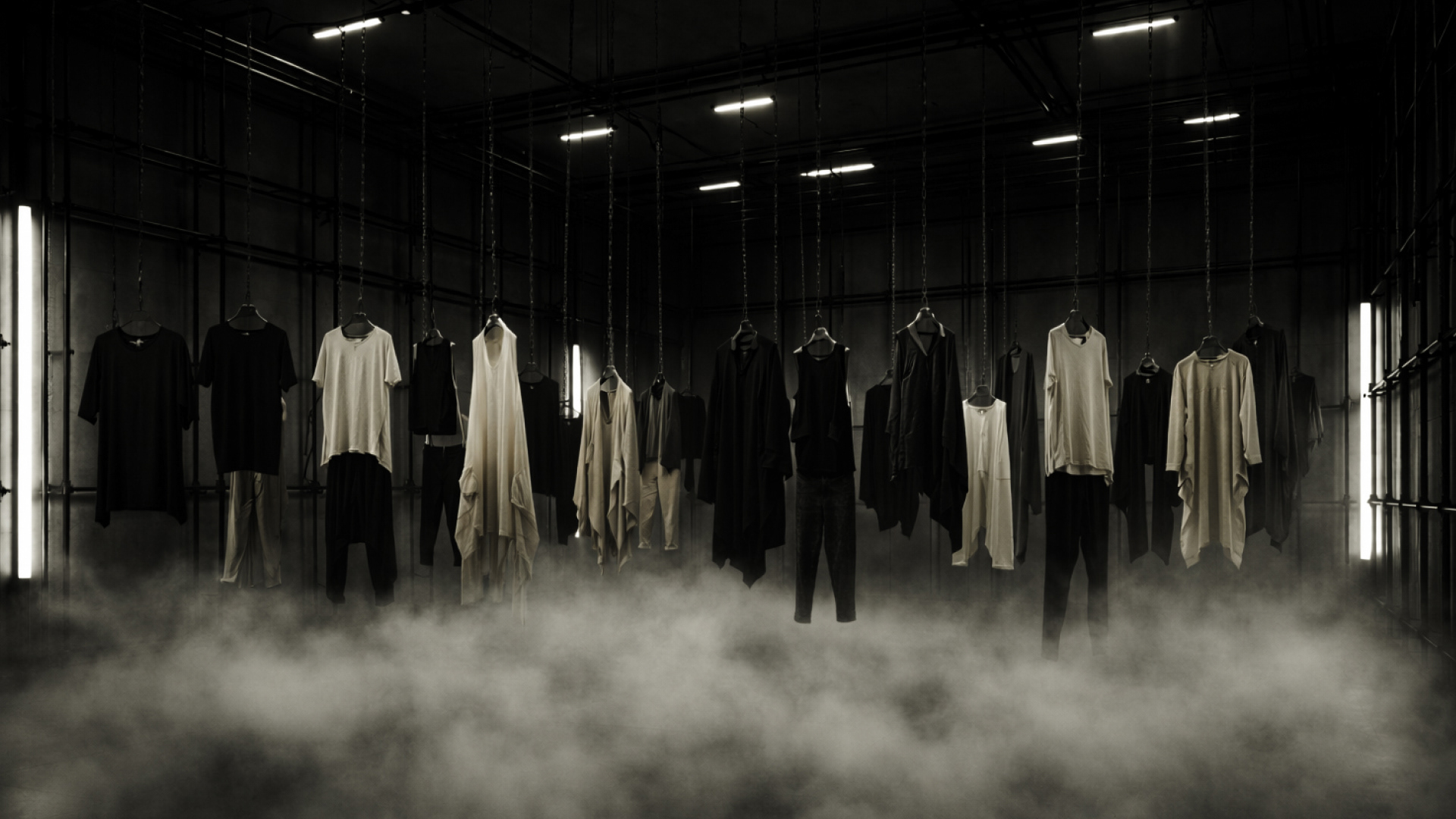
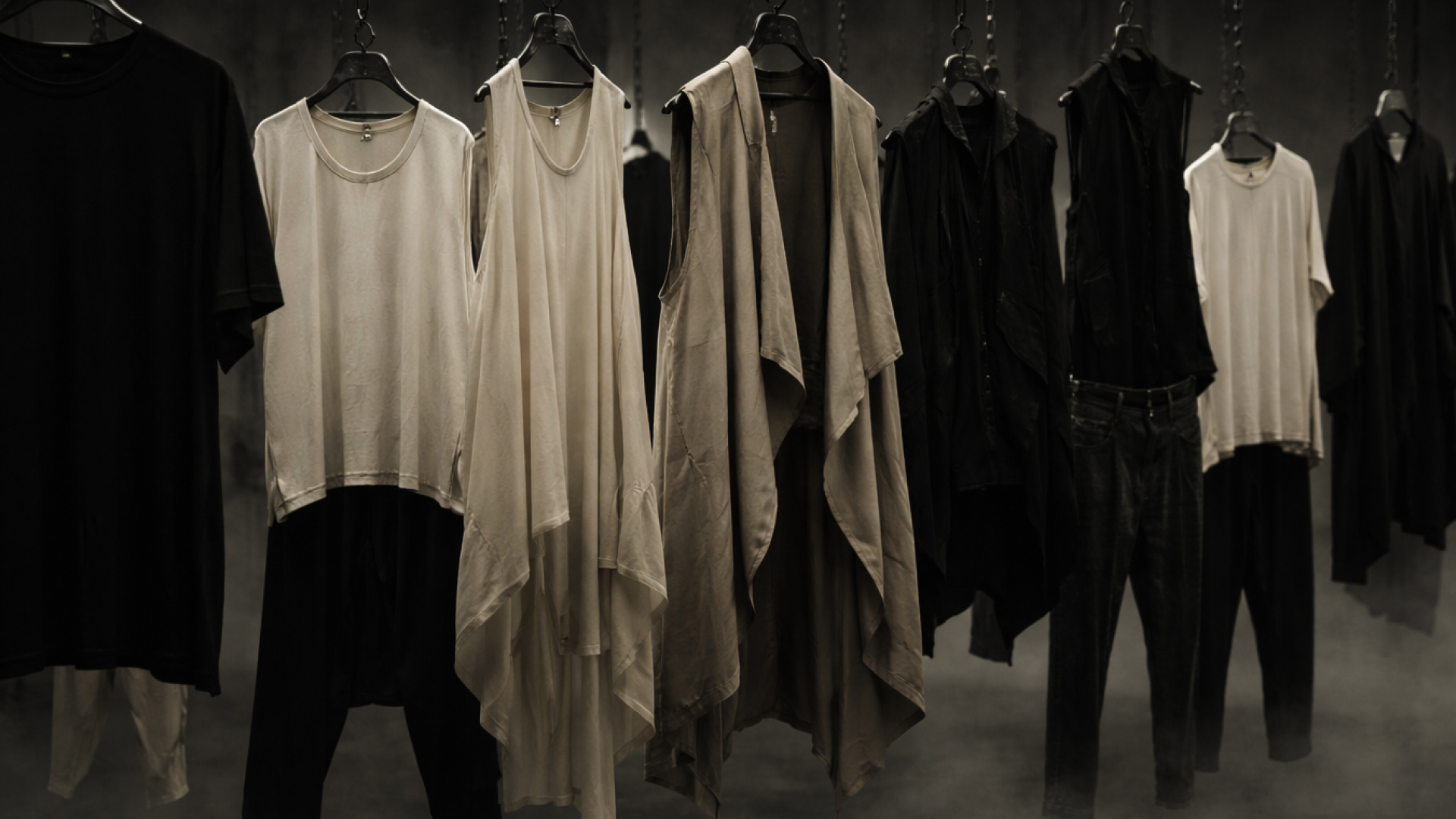
This room functions as an immersive exhibition space for Rick Owens’ newest designs. Garments are suspended throughout the room and carefully lit to highlight their structure, texture, and movement, offering visitors an intimate, gallery-like experience.
This room functions as an immersive exhibition space for Rick Owens’ newest designs. Garments are suspended throughout the room and carefully lit to highlight their structure, texture, and movement, offering visitors an intimate, gallery-like experience.
Phase 01 - Room 03
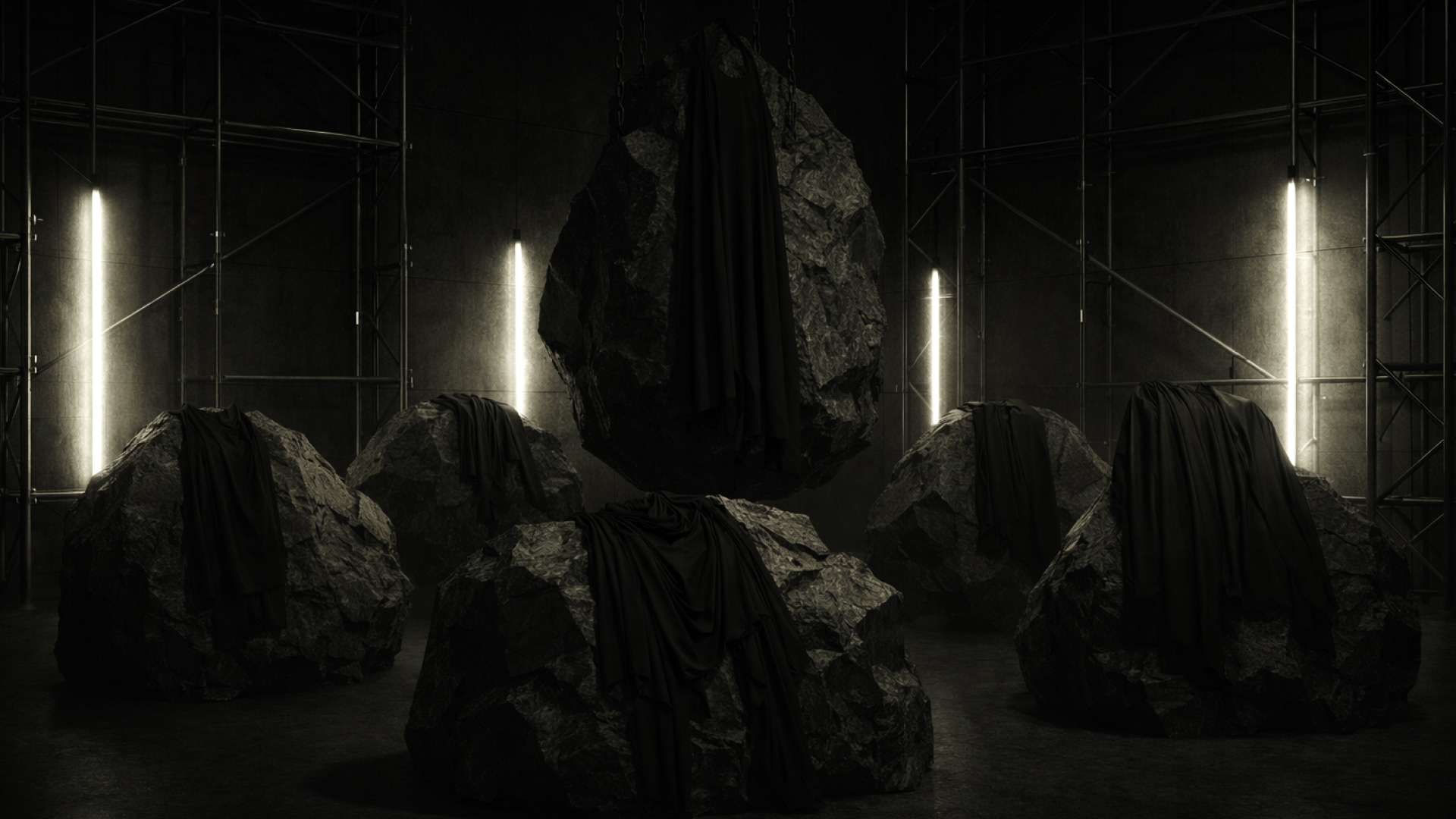
Room 03 intensifies the exhibition experience through the presence of colossal monoliths that rise from the floor, extend from the walls, and hang overhead.
The space functions as both a sculptural environment and a dramatic photo backdrop, reflecting the raw, sculptural edge of the brand’s identity.
Room 03 intensifies the exhibition experience through the presence of colossal monoliths that rise from the floor, extend from the walls, and hang overhead.
The space functions as both a sculptural environment and a dramatic photo backdrop, reflecting the raw, sculptural edge of the brand’s identity.
Phase 02 - The Afters
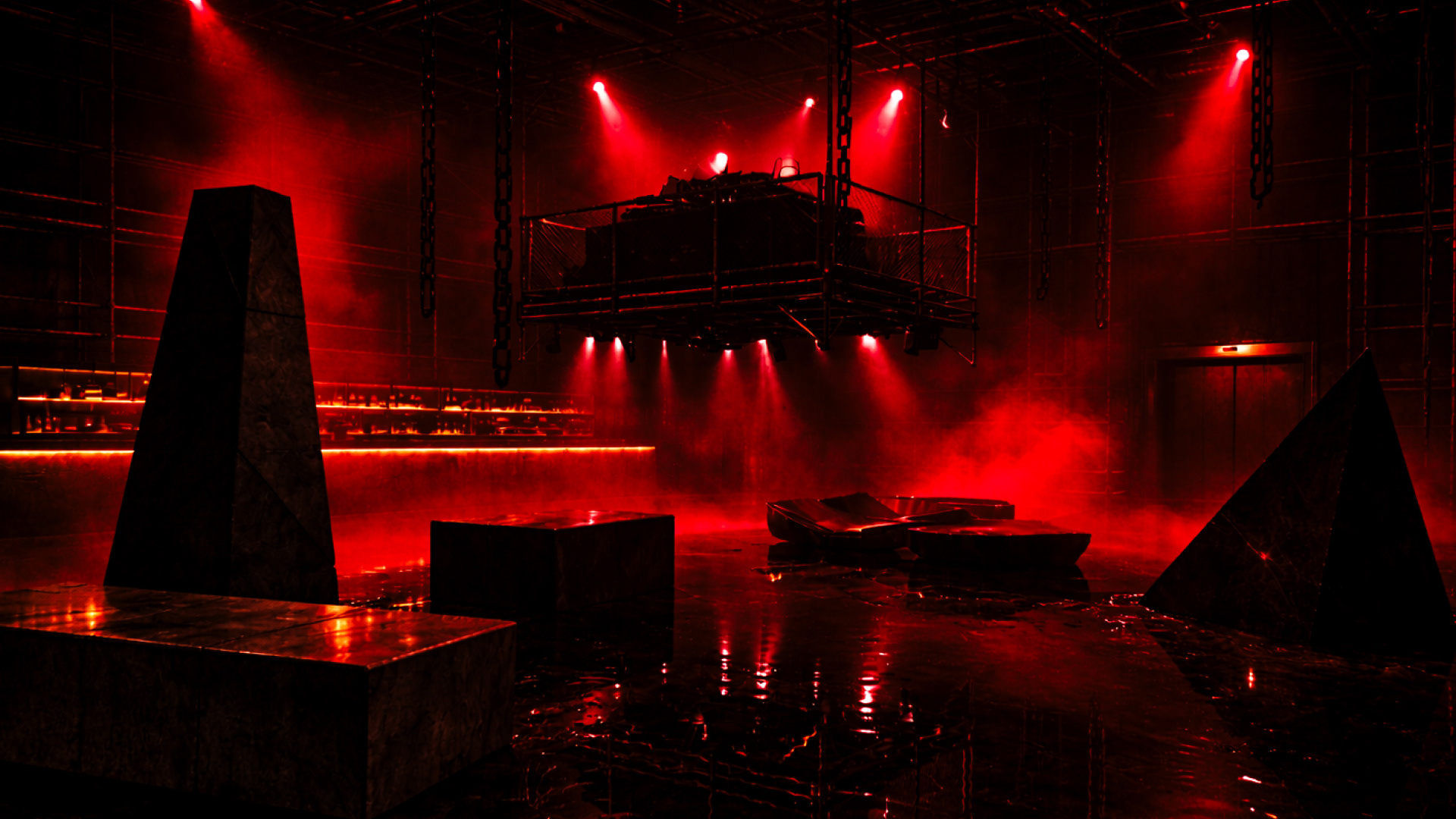
Phase 02 begins as guests descend by elevator into The Sanctum, an invite-only afterparty hidden beneath the warehouse. The atmosphere shifts instantly—low ceilings, pulsing light, and deep industrial sound create an intimate, charged environment.
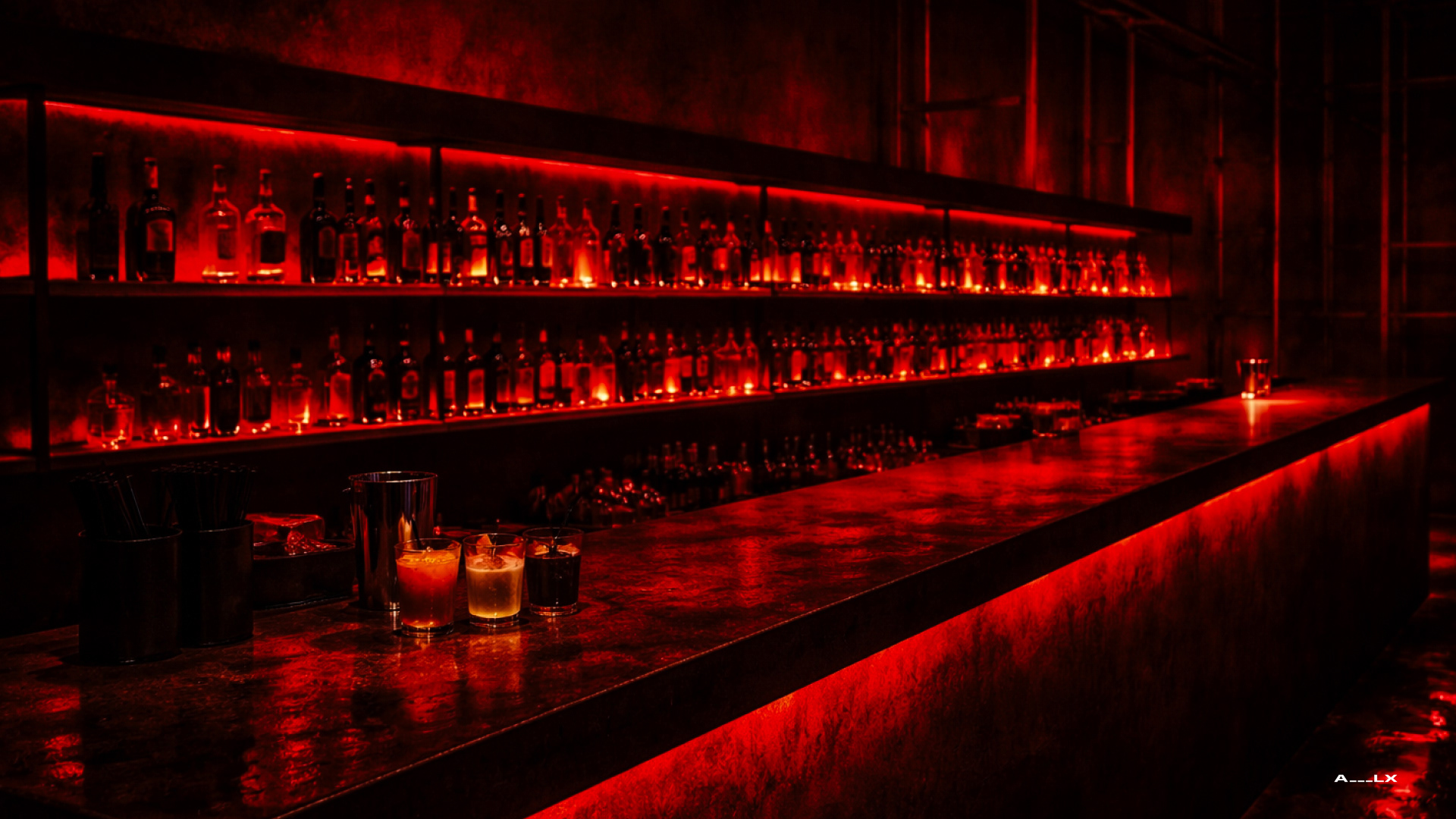
A brutalist bar serves signature cocktails while a DJ performs live experimental sets. Sculptural seating, reflective surfaces, and tight spatial compression make The Sanctum feel like a secret underground refuge where artists, collaborators, and muses gather to unwind, connect, and celebrate the energy of the exhibition.
Phase 02 begins as guests descend by elevator into The Sanctum, an invite-only afterparty hidden beneath the warehouse. The atmosphere shifts instantly—low ceilings, pulsing light, and deep industrial sound create an intimate, charged environment.
A brutalist bar serves signature cocktails while a DJ performs live experimental sets. Sculptural seating, reflective surfaces, and tight spatial compression make The Sanctum feel like a secret underground refuge where artists, collaborators, and muses gather to unwind, connect, and celebrate the energy of the exhibition.
Outreach Strategy
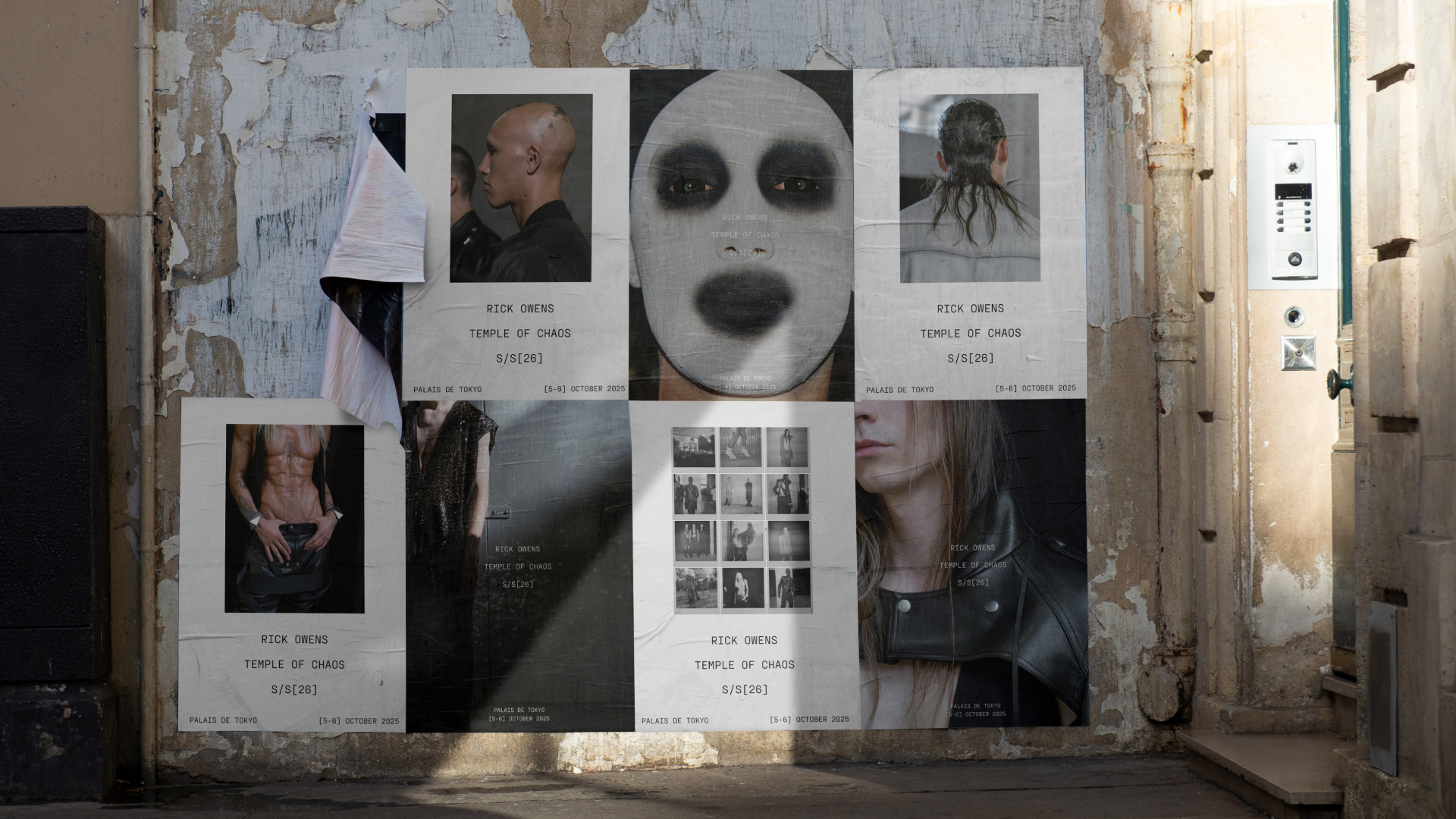
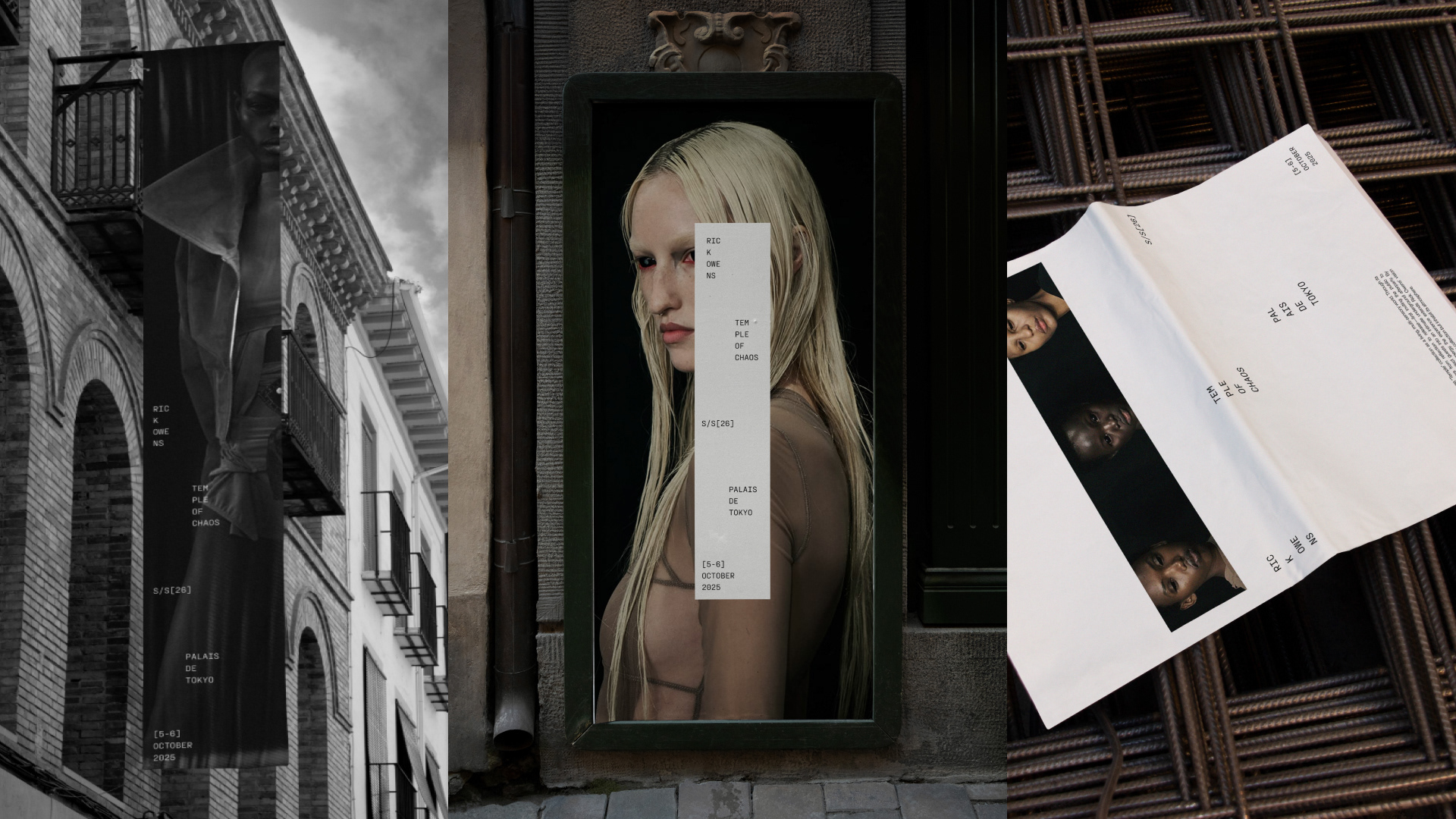
The outreach for Temple of Chaos relied on a quiet, understated visual language. Posters and flyers were designed to feel subtle at first glance, using restrained layouts and muted tones.
Intricate typographic compositions and striking imagery encouraged viewers to pause and look closer, creating a sense of intrigue rather than overt promotion. This approach aligned with the atmosphere of the exhibition—drawing in an audience through tension, curiosity, and visual restraint.
Summary
Temple of Chaos is a pop-up exhibition designed for Rick Owens’ S/S 26 collection Temple. The project merges fashion, architecture, and performance through a series of immersive spaces, using sculptural form, lighting, and layered visualization techniques to reflect the raw, ritualistic energy of the collection.
Temple of Chaos is a pop-up exhibition designed for Rick Owens’ S/S 26 collection Temple. The project merges fashion, architecture, and performance through a series of immersive spaces, using sculptural form, lighting, and layered visualization techniques to reflect the raw, ritualistic energy of the collection.